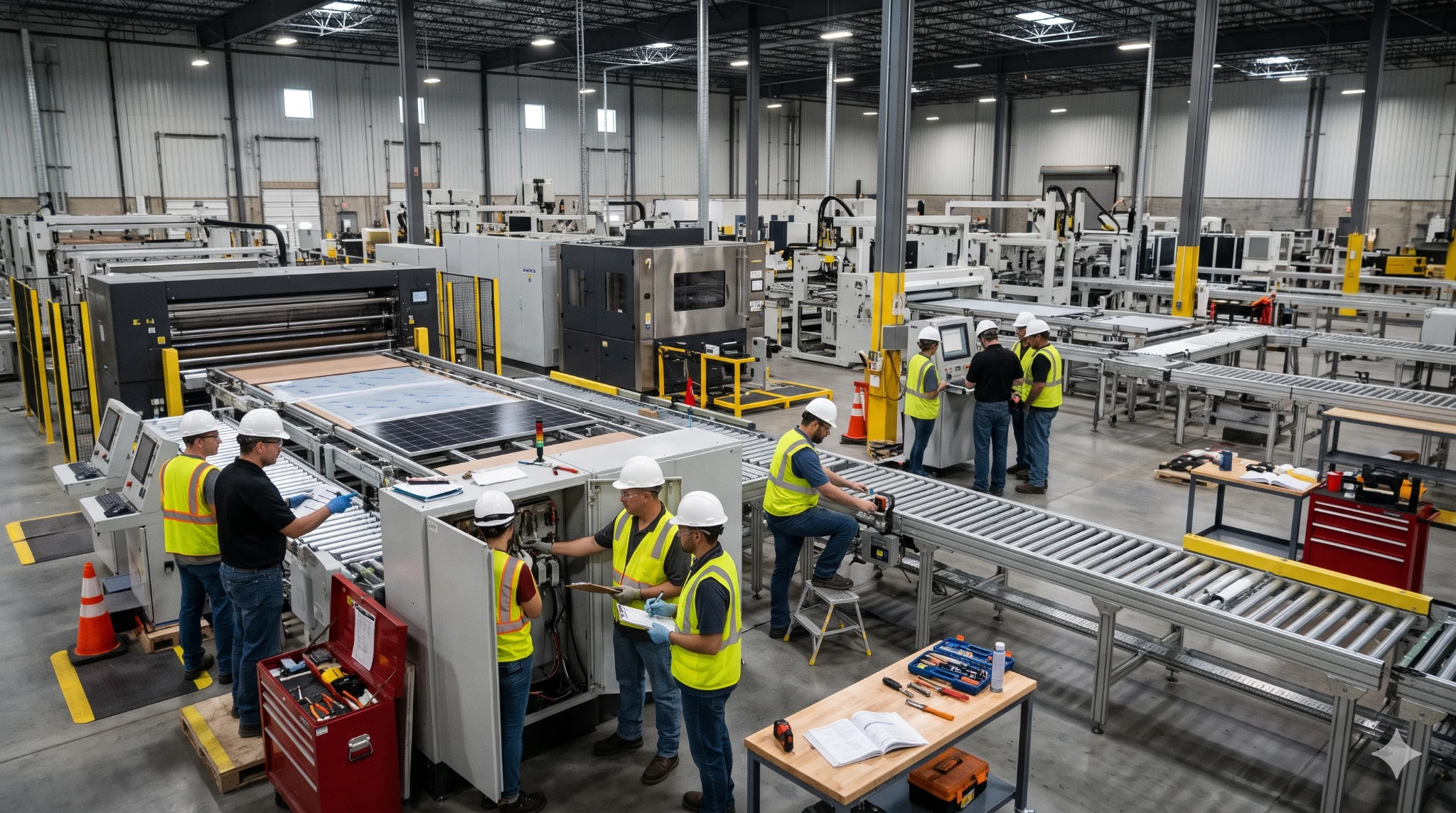
A business receives more orders than its current plant can handle. Leadership approves additional machinery, expands the facility or adds another shift. The investment increases available capacity. Yet delivery performance remains inconsistent, quality problems continue or the new assets are underutilised.
The business has added capacity without fully developing the capability required to use it.
Capacity is the amount of work an organisation can potentially process. Capability is its ability to convert resources into a consistent outcome under real operating conditions.
Expansion adds more than equipment
A new machine requires operators, maintenance, process knowledge, quality control, tooling, materials, planning and supervision. A new facility may require supply-chain coordination, production leadership, systems, safety processes and customer qualification. A larger sales pipeline may require application engineering, service coverage and working capital.
If these complementary elements are missing, the new capacity may create bottlenecks elsewhere.
The constraint simply moves. A machine can produce more, but inspection cannot keep up. Sales can win more orders, but engineering cannot release designs on time. Production can fulfil larger volumes, but suppliers cannot deliver consistent inputs. The business has expanded one resource while leaving the system unbalanced.
Capability is a combination
The ability to deliver reliably often depends on a combination of:
- technical knowledge and process control;
- people with the right skills and decision authority;
- dependable inputs and supplier relationships;
- planning, scheduling and information systems;
- quality, maintenance and service routines;
- commercial commitments that reflect actual delivery conditions.
These capabilities reinforce one another. A highly capable machine may not improve output if planning is weak. Experienced operators may not sustain quality if process parameters are not controlled. A strong supplier may not prevent disruption if purchasing decisions ignore lead-time variability.
Evaluate the whole constraint system before expanding
Before adding capacity, leaders should identify the current constraint and understand what will become the next constraint if throughput increases. They should examine whether the organisation can staff, feed, schedule, inspect, maintain and deliver the additional output.
A practical expansion case should therefore include more than asset utilisation and installed capacity. It should define the end-to-end output expected, the complementary capability investments required and the conditions that demonstrate readiness.
The same principle applies to non-manufacturing growth. Adding salespeople does not create market access if the offer is unclear. Hiring engineers does not create product capability if the architecture and validation process are absent. Deploying software does not create data capability if decision rights and workflows remain unresolved.
Stage capability with capacity
The business may need to sequence the investment: develop supervisors, standardise processes, qualify suppliers, improve planning, strengthen service or build application engineering before or alongside physical expansion.
These investments may appear less visible than machinery, but they can determine whether the asset produces the expected return.
The strategic implication
Capacity answers, “How much could we produce or process?” Capability answers, “Can we reliably convert that potential into a result customers value and the business can profitably deliver?”
Expansion decisions should be based on both. Otherwise, the organisation may pay for capacity it cannot effectively use—or create more complexity than growth.
Related reading
- How Complementary Capabilities Create More Value Together
- Build an Operating Rhythm That Converts Strategy into Results
Continue exploring this collection: Resilience — Confluence of Capabilities
Browse all articles · Ideas & Insights
Interested in the decisions behind technology-led growth? Explore Work With Me →
Continue reading in this collection
Preserve Optionality: Stage Gates, Reversibility and Commitment
Staged investment and reversible decisions allow leaders to learn before making large commitments, while protecting the ability to change direction.
Read article →
Design Experiments to Kill Assumptions, Not Confirm Them
Design experiments to expose the assumptions that could invalidate an idea before committing more time, money and capacity.
Read article →
The Evidence Trap: Why More Data Does Not Always Reduce Uncertainty
More research can create the appearance of rigour without resolving the assumptions that matter. Good evidence is decision-relevant, not merely abundant.
Read article →