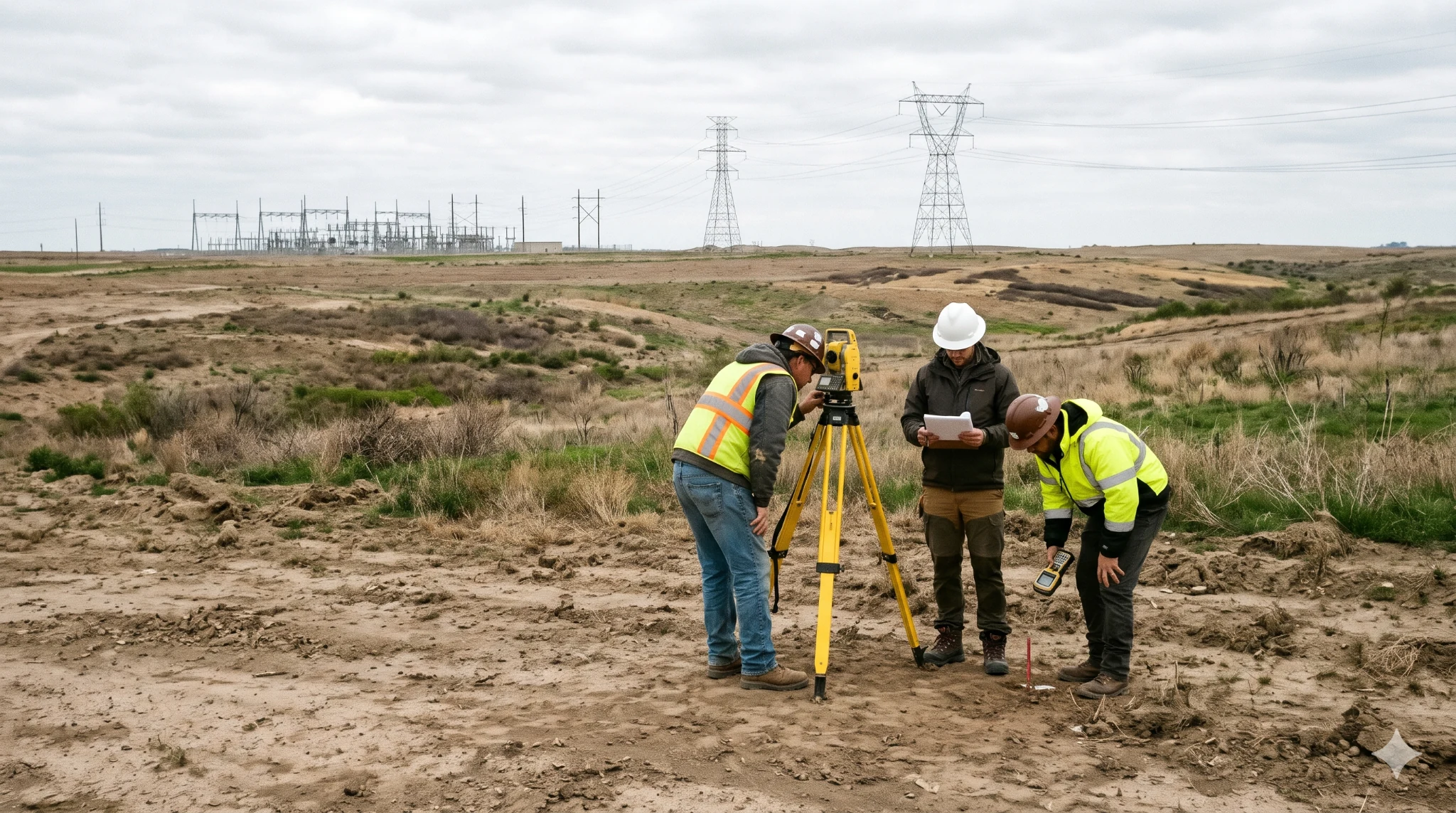
A business considers a new production line, an acquisition, a technology platform or entry into a new geography. The proposal contains a market estimate, expected revenue, projected margins and a timeline. The numbers may look precise, but the investment still depends on assumptions that are not equally certain.
Before committing capital, leaders should ask a more demanding question: what must be true for this investment to create the value we expect?
This question turns a forecast into a testable investment thesis.
Every investment case contains conditions
A new capacity investment may depend on customer demand materialising, the company winning a defined share of orders, suppliers meeting cost and quality expectations, production ramping up on schedule and the business having enough working capital.
An acquisition may depend on customers staying, key employees remaining, systems integrating and expected synergies being achievable. A market-entry investment may depend on channel access, qualification, pricing acceptance and local service capability.
A financial model combines these assumptions into an outcome. But the model can hide the fact that some conditions are supported by evidence while others are only hopes.
Identify the few assumptions that can change the decision
Not every assumption deserves equal attention. Leaders should identify the assumptions that are both uncertain and consequential. If an assumption is clearly established or has little effect on the investment, it may not be a decision-critical issue. If the case collapses when one uncertain condition fails, it deserves focused investigation.
A useful investment-thesis table can include:
| Condition that must be true | Current evidence | Uncertainty | Consequence if false |
|---|---|---|---|
| Customers will adopt at the intended price | Interviews, quotes, trials, purchase signals | Medium / high | Revenue case weakens |
| Delivery can meet required performance | Validation results, process capability | Medium | Higher cost or delayed launch |
| Supply is available at required economics | Supplier commitments and alternatives | High | Margin and timing pressure |
| Cash requirements remain manageable | Working-capital model and payment terms | Medium | Funding gap |
The table is a reasoning aid, not a substitute for detailed diligence. Its purpose is to expose where the investment depends on unresolved conditions.
Match evidence to the commitment
The required evidence should be proportionate to the size, reversibility and downside of the investment. A small feasibility study may justify a modest commitment. A dedicated facility or major acquisition requires stronger evidence on demand, execution capability, economics and risk.
Evidence should also be specific. Expressions of interest are not equivalent to budget approval. A successful technical trial is not equivalent to qualification. A forecast from a channel partner is not equivalent to validated customer demand.
Define the conditions for proceeding, changing or stopping
Before approval, leaders should state what evidence would justify the next commitment and what result would require a change. This prevents the organisation from continuing simply because it has already spent money or because the project has acquired internal momentum.
The conditions should be reviewed as facts change. A strategic investment is not made certain by a well-written memo; it becomes better governed when assumptions are visible and commitments can respond to evidence.
The strategic implication
Capital allocation is not just a comparison of projected returns. It is a decision about which uncertain conditions the organisation is prepared to underwrite.
The leadership question is: “What must be true for this investment to work, which of those conditions have we actually established, and what evidence do we need before committing further?”
Related reading
- The Evidence Trap: Why More Data Does Not Always Reduce Uncertainty
- Design Experiments to Kill Assumptions, Not Confirm Them
Continue exploring this collection: Resilience — Confluence of Capabilities
Browse all articles · Ideas & Insights
Interested in the decisions behind technology-led growth? Explore Work With Me →
Continue reading in this collection
Preserve Optionality: Stage Gates, Reversibility and Commitment
Staged investment and reversible decisions allow leaders to learn before making large commitments, while protecting the ability to change direction.
Read article →
Design Experiments to Kill Assumptions, Not Confirm Them
Design experiments to expose the assumptions that could invalidate an idea before committing more time, money and capacity.
Read article →
The Evidence Trap: Why More Data Does Not Always Reduce Uncertainty
More research can create the appearance of rigour without resolving the assumptions that matter. Good evidence is decision-relevant, not merely abundant.
Read article →