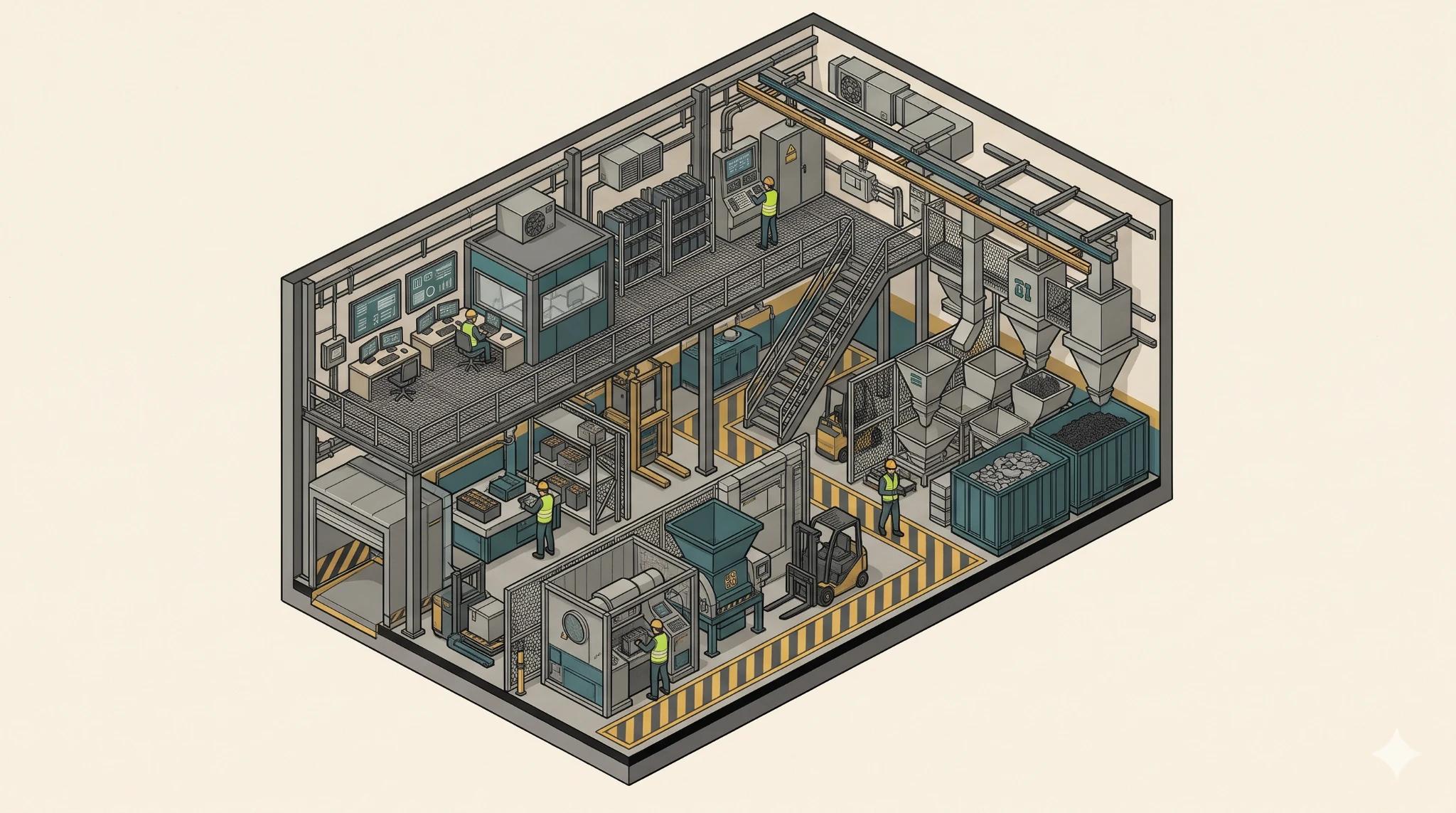
A business has limited capital. Its sales reach is narrow. The production facility cannot support every type of order. Its leadership team is small, and a few specialists carry much of the technical knowledge.
These constraints are real. Treating them as advantages without changing how the business operates would be wishful thinking.
But constraints can become inputs to strategic design. They can force the organisation to choose a narrower customer, simplify its offer, build partnerships or develop a delivery model that uses scarce resources more deliberately.
A constraint becomes useful only when it changes a choice
Limited capital might lead a company to pursue a segment where it can validate demand before committing to heavy fixed assets. Limited engineering capacity might encourage modular product architecture and stricter rules for custom work. Limited geographic reach might lead to a partner-led service model.
In each case, the constraint changes the design of the business. It does not disappear. The organisation chooses a position that is more compatible with what it can reliably deliver.
Design for the resources you can sustain
A common mistake is to build a strategy around resources the business hopes to acquire later. It assumes that capital will arrive, talent will be hired or a distribution partner will solve market access. Those assumptions may come true, but the strategy is fragile if it depends on them without a credible path.
A better approach distinguishes current resources, capabilities that can be developed and resources that must be accessed through partners. The business can then decide which opportunities are feasible now, which require staged investment and which should be deferred.
Focus can turn scarcity into a deliberate model
Consider a specialist manufacturer that cannot compete on broad product range or lowest price. It may choose a narrow application where process knowledge and engineering responsiveness matter more. The business can standardise around that application, deepen supplier relationships and build repeatable methods.
The strategy is not “we are small, so we are flexible.” It is “we will serve this defined problem with a delivery model designed around our specialised knowledge and constrained resources.”
That is a much more testable proposition.
Do not romanticise constraints
Some constraints must be removed. Unsafe equipment, inadequate quality controls, weak cash management or insufficient service capability should not be reframed as strategic advantages. Other constraints may make an opportunity unattractive regardless of how creatively the business designs around them.
Leaders must distinguish constraints that can be accommodated, constraints that should be invested in and constraints that make the chosen market impossible to serve responsibly.
The strategic implication
Constraints do not create advantage by themselves. They create pressure to make choices. Advantage appears when those choices produce a distinctive, valuable and repeatable position.
The leadership question is: “Given the resources and capabilities we can realistically sustain, what business model and market position can we design to win?”
Related reading
Continue exploring this collection: Strategy — The Power of a Moat
Browse all articles · Ideas & Insights
Interested in the decisions behind technology-led growth? Explore Work With Me →
Continue reading in this collection

Why Focus Can Produce Disproportionate Returns
Focus can deepen knowledge and capability faster than spreading scarce resources across a much larger market.
Read article →
Find the Asymmetry Hidden in the Customer's Value Chain
A supplier can create disproportionate value by solving an overlooked problem at a critical point in the customer's wider value chain.
Read article →
Compete Where the Incumbent Is Structurally Weak
A challenger should look beyond visible competitor weaknesses to the constraints embedded in an incumbent's economics, customers and operating model.
Read article →