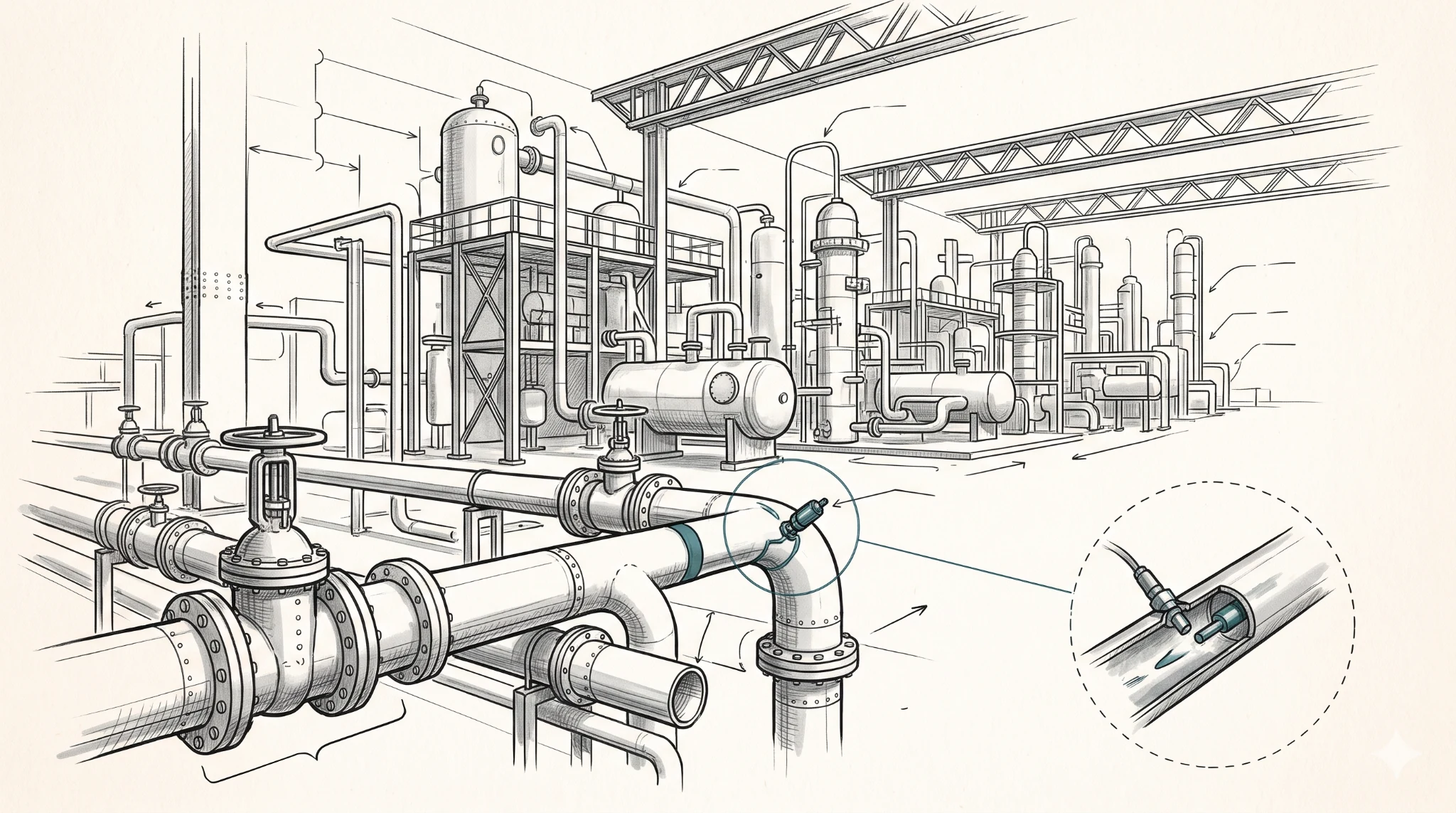
A supplier often defines its opportunity by the product it sells. A component maker looks for component demand. A software provider looks for software budgets. An equipment company looks for machine replacement cycles.
But the customer's reason to buy may sit elsewhere. A small input can influence production yield. A data service can reduce maintenance uncertainty. A specialised material can remove a process constraint. A supplier may create value far beyond the price or physical size of what it provides.
The opportunity is to find the point in the customer's value chain where a focused intervention changes an important outcome disproportionately.
Look beyond the immediate transaction
The customer's value chain includes activities that create, deliver and support the final product or service. A supplier's offering enters one part of that system, but its effect may extend to other stages.
A component may affect assembly time, reliability, warranty exposure or downstream quality. A process-control tool may improve not only machine performance but also scheduling, traceability and customer acceptance. A service provider may reduce the duration of a production interruption and protect delivery commitments.
Understanding these connections helps a supplier see why its offer matters—and where a seemingly small problem has a large consequence.
Search for neglected points of consequence
The strongest opportunities are not always in the largest cost category. They may be in a dependency that receives little attention because it is difficult to measure, falls between departments or is handled through workarounds.
Ask where delays accumulate, where variation creates downstream rework, where failure creates disproportionate risk, where knowledge is fragmented and where the customer has accepted a recurring compromise.
Then trace the consequence. Which process is affected? Who experiences the cost? Who owns the decision to change it? What does the customer currently do to manage the problem?
Translate the intervention into customer economics
A supplier should avoid claiming that its product is valuable simply because it is technically sophisticated. It should show how the intervention changes a customer outcome: less downtime, lower scrap, more predictable output, reduced qualification time, better traceability or lower lifecycle cost.
The outcome must be credible and attributable. A solution may influence several factors, but the customer needs to understand which improvement can reasonably be connected to the supplier's contribution.
Build around the point of leverage
Once the value-chain opportunity is understood, the supplier can shape its offer around the customer's important outcome. This may require integration with other activities, a service model, application engineering or new commercial terms.
The business should also ask whether the position can be repeated across similar customers. A one-off intervention can be profitable, but the strategic opportunity is stronger when the learning and capability can be reused without compromising customer-specific requirements.
The strategic implication
A supplier does not need to own a large portion of the customer's value chain to influence an important result. It needs to understand where its contribution changes the economics or reliability of the whole system.
The leadership question is: “Where does a focused capability of ours remove a constraint or risk that matters disproportionately to the customer?” That is often where a challenger can create value beyond its apparent size.
Related reading
Continue exploring this collection: Strategy — The Power of a Moat
Browse all articles · Ideas & Insights
Interested in the decisions behind technology-led growth? Explore Work With Me →
Continue reading in this collection

Why Focus Can Produce Disproportionate Returns
Focus can deepen knowledge and capability faster than spreading scarce resources across a much larger market.
Read article →
Turn Constraints Into Strategic Design Choices
Constraints can shape a focused business model when leaders design around limited capital, capacity and market access.
Read article →
Compete Where the Incumbent Is Structurally Weak
A challenger should look beyond visible competitor weaknesses to the constraints embedded in an incumbent's economics, customers and operating model.
Read article →