When leaders discuss customer retention, they often focus on service quality, account management and relationship strength. These matter, but they do not fully explain why a customer would continue choosing one supplier when alternatives become available.
A more structural question is: what would the customer have to change, repeat, risk or rebuild to move elsewhere?
Those are switching costs. They are often treated as a fortunate outcome of serving a customer for a long time. In reality, many legitimate switching costs can be designed into the way a business creates value.
Four sources of switching cost
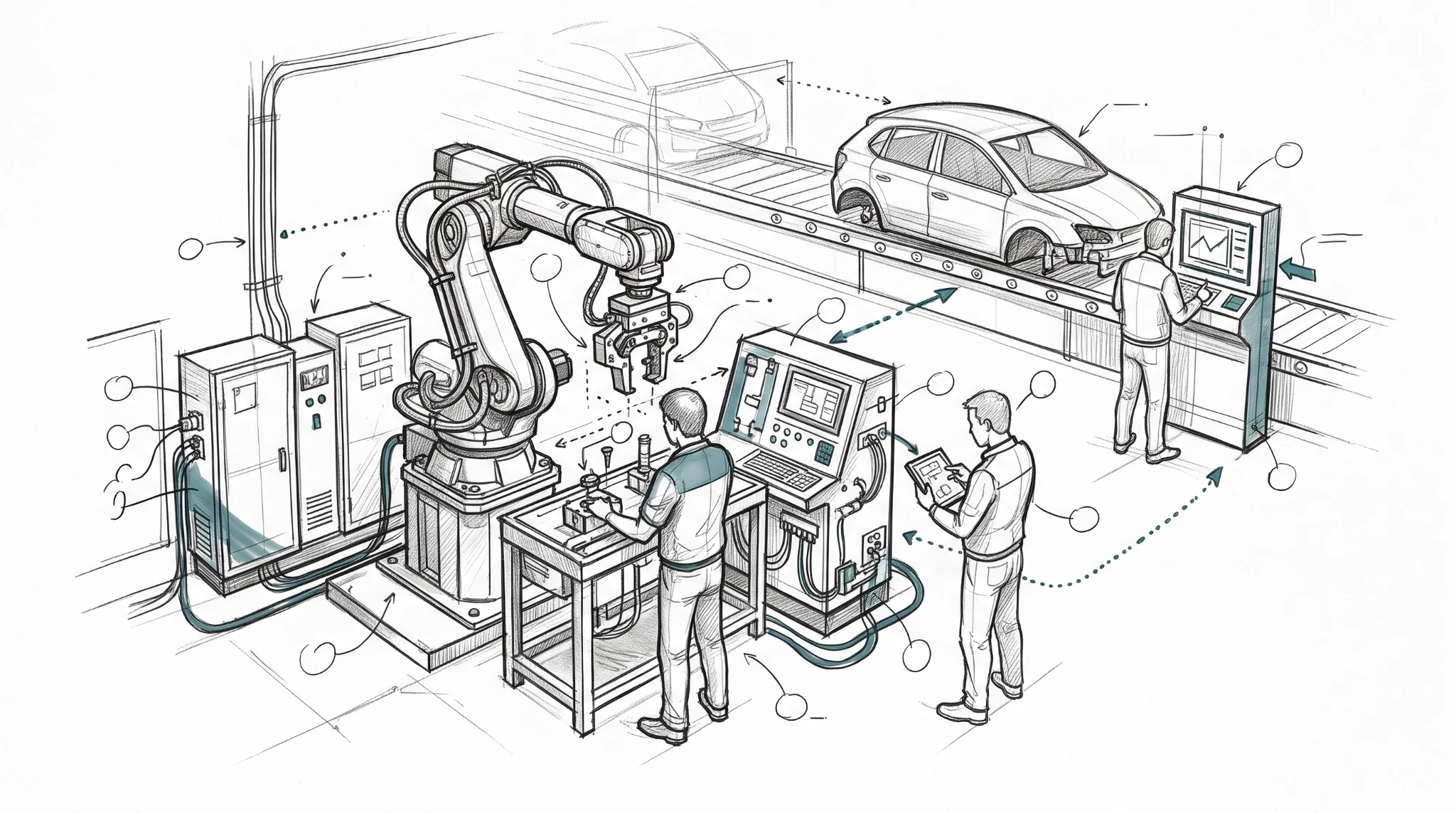
Integration. A supplier's product or service may become connected to the customer's workflow, equipment, software, quality system or operating procedures. Replacing it may require interface changes, retesting and process adjustments.
Qualification. In regulated, safety-critical or quality-sensitive environments, a new supplier may need to demonstrate that its offering meets established requirements. The time and effort required to validate an alternative can be substantial, even when the alternative appears technically similar.
Accumulated knowledge. Over time, a supplier may learn the customer's operating conditions, recurring failure patterns, configuration history and application-specific requirements. That knowledge can improve diagnosis and response. A replacement provider must acquire or reconstruct it.
Continuity. Customers may rely on a supplier's delivery reliability, spare-parts availability, service response or ability to manage change without disrupting operations. The perceived risk of interruption becomes part of the switching decision.
These mechanisms are different, but they share a common feature: they arise because the supplier has become connected to something that matters in the customer's operation.
Design for value before designing for retention
There is an important ethical and commercial distinction between useful integration and obstructive lock-in. A supplier that withholds data, blocks interoperability or makes exit unnecessarily difficult may create short-term friction, but it can damage trust and invite customer resistance.
A stronger approach is to make the relationship valuable enough that the customer prefers continuity. Integration should reduce effort. Qualification support should improve confidence. Knowledge should help solve problems faster. Service arrangements should protect operations.
Switching costs are durable when they are the by-product of customer value rather than a barrier imposed against the customer's interest.
Look for the design decisions that create embeddedness
Consider a specialised equipment supplier. It could sell a machine and end the relationship at installation. Or it could support process validation, maintain configuration records, train operators, integrate maintenance signals and help the customer interpret performance deviations.
The second model requires more capability from the supplier. It may also create a stronger position because the supplier participates in a larger part of the customer's operating system. The customer gains continuity and accumulated knowledge; the supplier gains a deeper understanding of the application and a more meaningful role.
This does not guarantee a moat. A competitor may still reproduce the service model, and the customer may still decide that the relationship no longer creates enough value. But it changes the basis of competition from a single transaction to a connected system of outcomes.
A practical design test
Map the customer's journey before, during and after adoption. Identify where the supplier can reduce repeated effort, qualification risk, coordination burden or operating uncertainty. Then ask whether those contributions are measurable and transferable into a repeatable service or product model.
Also design a fair exit. A customer should be able to retrieve its data, understand its configurations and transition responsibly. The fact that a customer can leave—and still chooses to stay—is stronger evidence of value than a contract that makes departure difficult.
The strategic implication
Switching costs should not be left to chance. They can be strengthened through thoughtful integration, qualification support, accumulated application knowledge and continuity.
But the objective is not to trap a customer. It is to become a more valuable participant in the customer's operation. The best switching cost is the work required to replace a genuinely useful contribution.
Related reading
- The Economics of Becoming Difficult to Replace
- When Customer Concentration Becomes a Hidden Moat—and a Risk
Continue exploring this collection: Strategy — The Power of a Moat
Browse all articles · Ideas & Insights
Interested in the decisions behind technology-led growth? Explore Work With Me →
Continue reading in this collection

Why Focus Can Produce Disproportionate Returns
Focus can deepen knowledge and capability faster than spreading scarce resources across a much larger market.
Read article →
Find the Asymmetry Hidden in the Customer's Value Chain
A supplier can create disproportionate value by solving an overlooked problem at a critical point in the customer's wider value chain.
Read article →
Turn Constraints Into Strategic Design Choices
Constraints can shape a focused business model when leaders design around limited capital, capacity and market access.
Read article →